
The Problem With Relying on Systems Alone
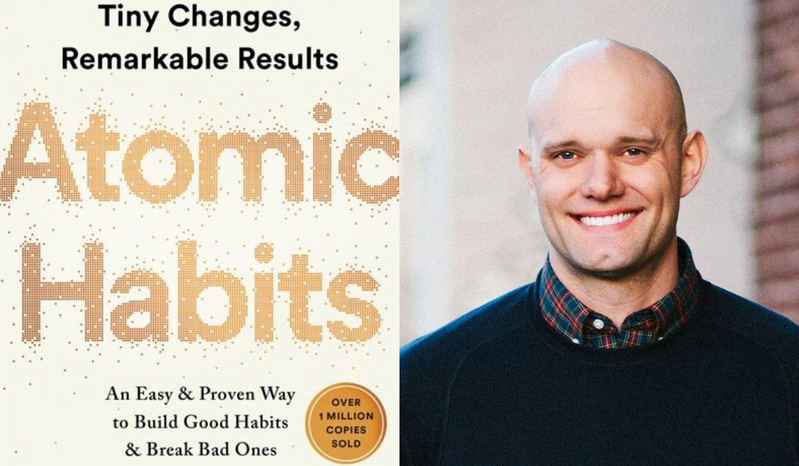
I want to start with a line from Atomic Habits.
James Clear says, “We don’t rise to the level of our goals. We fall to the level of our systems.”
It’s a good line. I agree with it.
But I’d change one word.
I’d say, we don’t rise to the level of our goals. We fall to the level of our training.
And I want to be clear about what I mean by training.
I don’t mean discipline. I don’t mean willpower. I don’t mean pushing harder.
I mean what you’ve trained yourself to do inside when things get uncomfortable.
Because that’s the part most people never look at.
Here’s what I’ve noticed.
Most systems work when life is easy.
When you have time. When you feel motivated. When things are flowing.
That’s when habits look clean. That’s when consistency feels effortless.
But life doesn’t stay like that.
Pressure shows up.
And pressure doesn’t have to be dramatic.
Sometimes it’s subtle.
Not hearing back from someone. Not knowing if you’re doing it right. Feeling a little tired. Feeling a little unsure.
Nothing big.
Just enough that something in you tightens.
And that’s usually where things stop.
Not because the system was bad.
But because your inner state wasn’t trained to stay.
You’ve felt this.
You sit down to do the thing.
The calendar is clear. You know what to do. Nothing is actually stopping you.
And still, you hesitate.
You open the laptop. You stare at the screen.
You feel the pull to check something else.
Your phone. Your email. Anything.
That’s not laziness.
That’s not a motivation problem.
That’s capacity.
That’s your system asking your inner world to hold more than it’s practiced holding.
And your body saying, “I don’t really know how to do that.”
This part matters.
Because most people respond to that moment by blaming themselves.
They think, “What’s wrong with me?”
“Why can’t I just push through?”
“Other people don’t seem to struggle like this.”
But nothing is wrong with you.
Your body is doing exactly what it was trained to do.

If every time uncertainty showed up you pulled away…
If every time things felt uncomfortable you distracted yourself…
If every time there was emotional friction you tightened and rushed…
Then your system learned, “This is how we stay safe.”
That’s not failure.
That’s conditioning.
And conditioning can change.
But only once you stop fighting it and start noticing it.
Pressure doesn’t create new behavior.
It reveals what’s already there.
I worked with someone who had a solid writing system.
Time blocked. Outline ready. Clear intention.
When things were calm, the writing flowed.
But the moment feedback was late, or expectations felt unclear, the writing stopped.
Not as a decision.
It just stopped.
Their shoulders tightened. Their breath got shallow. Their attention scattered.
Nothing about the system changed.
Their state did.
What had really been trained wasn’t writing.
It was pulling away when uncertainty showed up.
You see this everywhere.
You plan to have a grounded conversation and halfway through your tone sharpens.
You sit down to work and suddenly you’re reorganizing things that don’t matter.
You tell yourself you’re going to rest and instead you scroll.
These aren’t random moments.
They’re rehearsed responses.
They’re what your system already knows how to do under pressure.
One of the biggest shifts people have when they really see this is they stop trying to override their inner experience.
They stop saying, “Come on, just do it.”
And instead they say, “Okay… something in me is uncomfortable right now.”
That one sentence changes everything.
Because now you’re not at war with yourself.
You’re training something new.
You’re training the ability to stay present while discomfort is there.
That’s real capacity.
So if you’ve ever thought, “Why can’t I just stay consistent?”
Or, “Why does this fall apart when things get harder?”
Hear this clearly.
This isn’t about effort.
It’s about what your inner state has been trained to do when things stop feeling comfortable.
And that’s something we can work with.
Just notice this today.
When something feels slightly uncomfortable, do you stay, or do you drift?
That noticing alone already starts to change things.
